Many travelers have experienced the same unsettling moment.
You search for a hotel.
You check again later.
The price appears higher.
It raises an uncomfortable question:
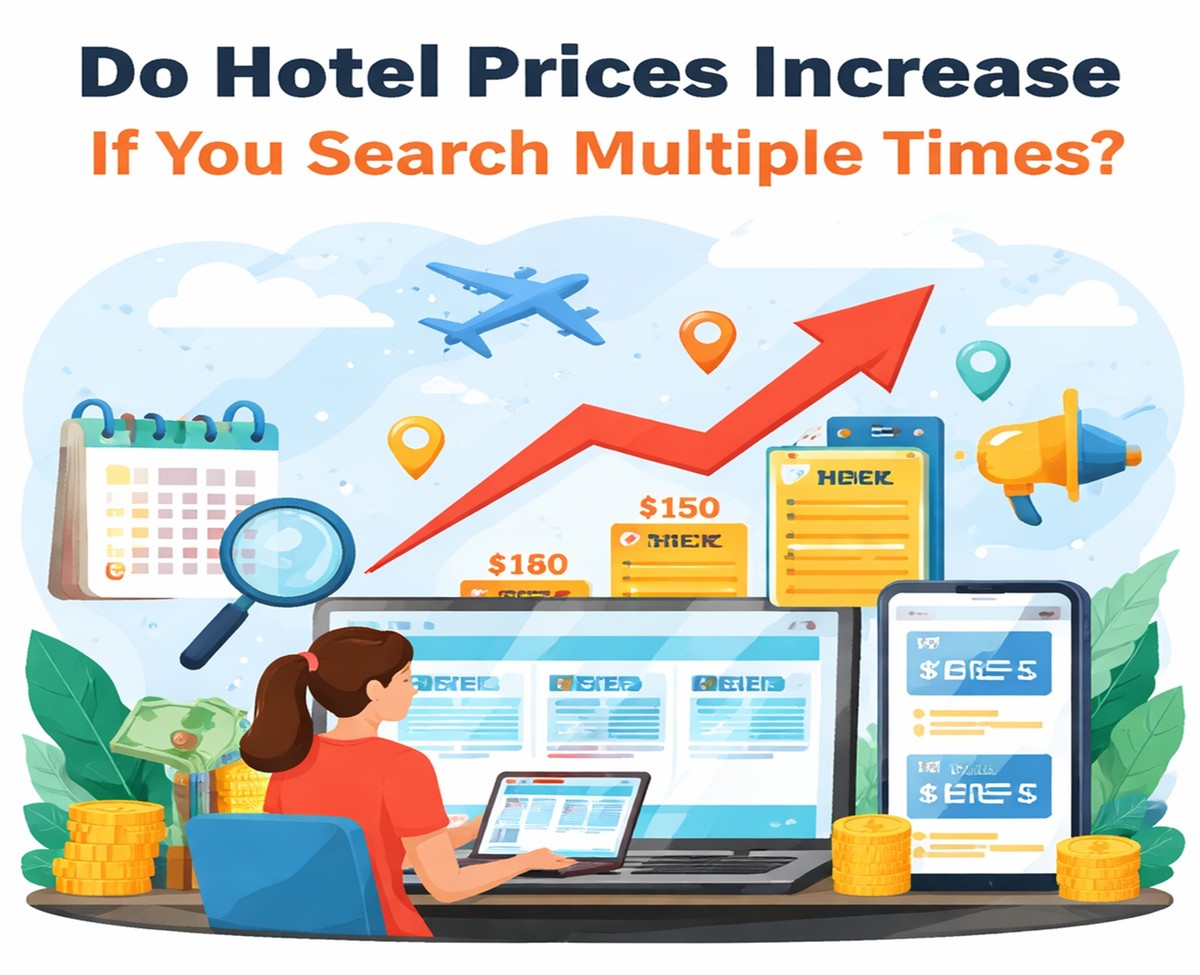
Are hotel websites increasing prices because you searched more than once?
The idea feels plausible. After all, modern websites track behavior. Prices change quickly. And booking platforms operate with sophisticated algorithms. But is repeated searching actually triggering price increases, or are we misunderstanding how hotel pricing works?
To answer that properly, we need to look at how hotel rates are structured, how pricing systems function, and what really causes fluctuations.
Why the Suspicion Exists
The belief that prices rise after repeated searches comes from pattern recognition. Travelers often notice:
- Rates shifting within hours
- Price differences between devices
- Variations when switching to private browsing
- Rapid increases close to travel dates
When these changes occur soon after a second or third search, it feels personal. But pricing systems rarely operate at the individual level. They operate at the market level.
Understanding this distinction is crucial.
How Hotel Pricing Systems Actually Work
Hotels do not manually adjust prices for each visitor. Instead, they rely on revenue management systems powered by demand forecasting models and algorithmic pricing.
This system is known as dynamic pricing.
Dynamic pricing allows hotel rates to adjust automatically based on real-time market signals. These signals include:
- Overall booking demand for selected dates
- Remaining room inventory
- Competitor pricing in the same area
- Local events or seasonal patterns
- Booking lead time
The system continuously recalculates optimal pricing tiers. As rooms sell, pricing can move into higher availability brackets.
If you happen to check prices before and after one of these recalculations, the change appears connected to your search — even though it is not.
Learn more: how to compare hotel prices
The Role of Inventory Tiers
Hotels typically do not sell all rooms at a single fixed price. Instead, they divide their inventory into pricing tiers. A property might release an initial batch of rooms at a lower rate, followed by a second batch at a moderately higher rate, and then a final group at a premium price.
“For example, a hotel may offer its first ten available rooms at €150 per night. Once those are booked, the next five rooms may automatically shift to €165 per night. After those are sold, the remaining rooms could move to €180 per night. This progression is built into the hotel’s revenue management system from the beginning.”
If you happen to search when the €150 allocation is still available, you will see that lower price. But if several rooms are booked before your next search, the system moves to the next pricing tier. The increase appears connected to your behavior, yet in reality it reflects reduced availability.
This structured tier system explains many of the perceived “search-triggered” price increases. The system is responding to inventory levels, not to an individual user refreshing the page.
Do Booking Platforms Track You?
Yes, most travel websites use cookies and session tracking. However, their primary purposes are:
- Storing preferences (language, currency)
- Retargeting advertisements
- Saving recent searches
- Enhancing personalization
There is limited public evidence that major global booking platforms systematically increase hotel prices solely because an individual searched repeatedly.
Pricing adjustments tend to respond to market-wide demand, not to a single browser session.
Why Prices Can Change Within Hours
Hotel pricing systems update frequently — sometimes multiple times per day.
Rapid changes can occur due to:
- A spike in searches for specific dates
- A conference or event announcement
- Competitor hotels selling out
- Airline ticket price increases
- Sudden shifts in demand patterns
These factors influence pricing engines in real time. If you search during a period of heightened activity, you may see movement that feels immediate and personal, but is actually algorithmic and demand-driven.
What About Incognito Mode?
Many travelers test the theory by switching to private browsing.
Occasionally, minor variations appear. These differences may result from:
- Cached search results
- Geographic pricing adjustments
- Currency display differences
- Platform-specific promotions
Incognito mode prevents your browser from using stored cookies, but it does not bypass global pricing algorithms. It may change how offers are displayed, but it does not fundamentally alter demand-based rate calculations.
When Do Prices Actually Increase Significantly?
Substantial price increases are far more likely to occur under predictable circumstances:
- Major events in a city (festivals, sports tournaments, conventions)
- High-season travel periods
- Approaching check-in dates
- Sudden inventory reductions
In cities like Rome, Paris, New York, or Dubai, event-driven demand can push pricing systems to update rapidly. This creates the illusion of “search-triggered” increases when the real driver is broader market demand.
Why the Same Hotel Shows Different Prices Across Websites
Another major source of confusion is cross-platform variation.
The same hotel room may display different rates because booking providers operate under different agreements and structures. Differences can stem from:
- Commission structures
- Room allotment contracts
- Tax inclusion methods
- Currency conversion timing
- Bundled service fees
This is where hotel comparison platforms become valuable. Viewing multiple price sources side by side provides context that single-platform browsing cannot.
When travelers compare rates across providers, fluctuations appear less mysterious.
The Psychological Effect of Watching Prices
Part of the perception issue is behavioral. When planning travel, we monitor prices closely. Small increases feel significant because we are paying attention.
If a hotel rises from €150 to €165, it feels dramatic — even though it reflects a standard inventory shift.
Repeated observation amplifies the perception of manipulation.
In reality, the system is responding to aggregated demand, not individual attention.
The Influence of AI and Revenue Management
Modern hotel pricing uses advanced forecasting models that analyze:
- Historical booking trends
- Competitor occupancy rates
- Event calendars
- Search volume trends
- Seasonal performance data
Machine learning allows systems to adjust pricing in response to patterns rather than individual behavior.
These systems optimize revenue across hundreds or thousands of users simultaneously. They do not typically isolate one person’s repeated searches to raise prices independently.
So Is It a Myth or Reality?
The belief that hotel prices increase simply because you searched multiple times is largely a misunderstanding.
There is no strong evidence that repeated searches alone trigger price increases for individual users on major global booking platforms.
However, prices do change frequently due to dynamic inventory management and demand forecasting.
What feels personal is usually systemic.
How to Approach Hotel Pricing Strategically
Rather than worrying about repeated searches, a more productive approach includes:
- Comparing rates across multiple booking providers
- Monitoring event calendars in your destination city
- Checking flexible cancellation options
- Booking when demand signals are stable
- Understanding that pricing tiers may shift quickly
Awareness of how pricing systems operate reduces anxiety and improves decision-making.
Learn more: Why Travelers Use BestHotelsPrices to Compare Hotel Rates
Final Perspective
Hotel pricing is complex, automated, and market-driven. While websites do use tracking technologies, the idea that repeated searches alone cause targeted price increases is largely unsupported.
What travelers observe is usually the natural movement of dynamic pricing systems responding to supply and demand.
The key is not avoiding searches, it is understanding how pricing mechanisms work and comparing available rates intelligently.
When you approach hotel booking with clarity rather than suspicion, the process becomes more strategic and far less stressful.